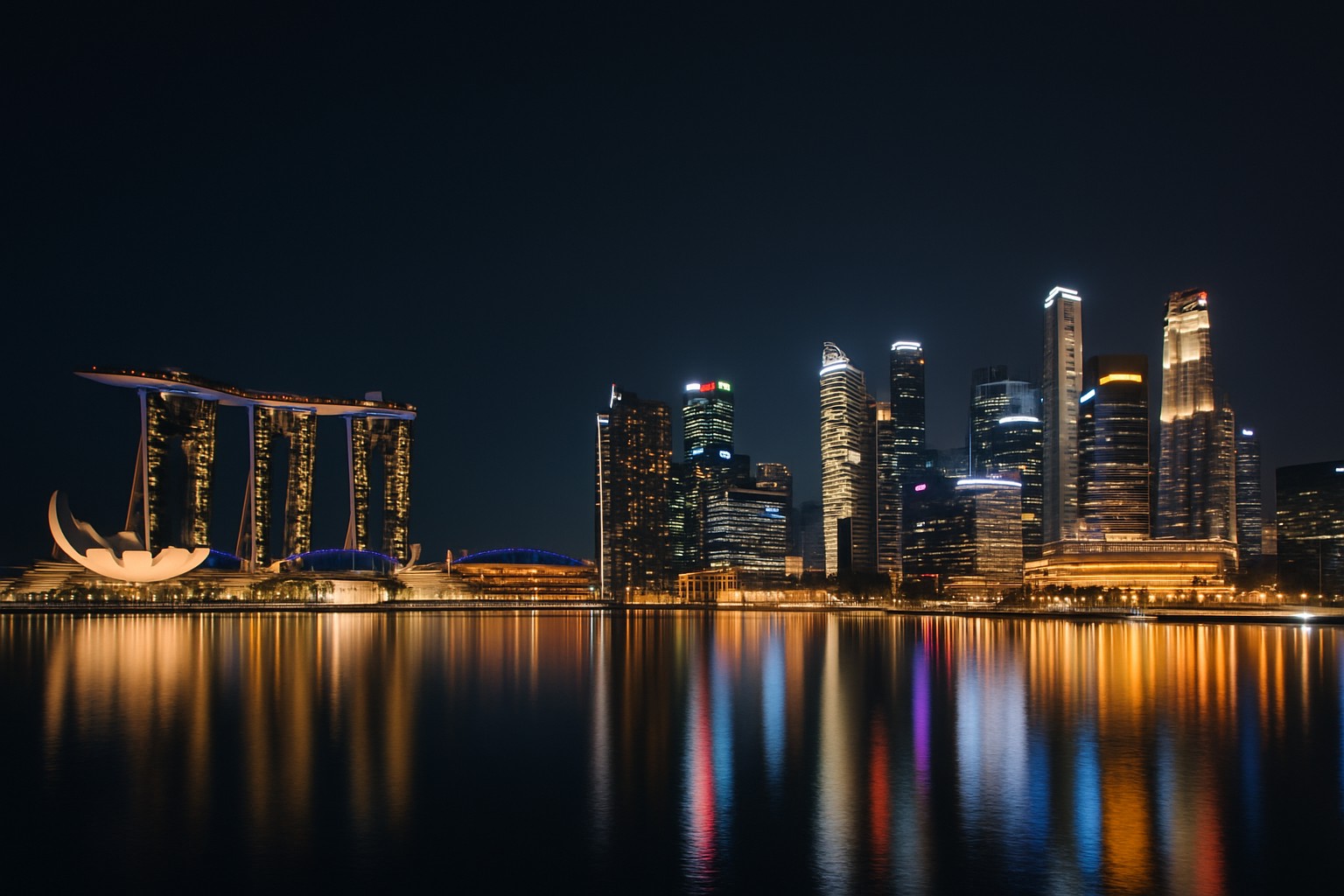
If you've been watching Singapore's property market from the sidelines, wondering where the serious institutional money is actually going, this story is your answer. A single deal reportedly in the works for 50 conservation shophouses at around S$500 million tells you everything about where sophisticated capital is positioned right now, and what that signals for the broader market you're operating in.
According to ERA research and market data, Singapore's landed shophouse market recorded roughly 70 deals worth approximately S$516 million for the full year 2025. That's already a decade low, down sharply from the 2021 peak of 245 transactions worth S$1.8 billion. So when a single portfolio deal of 50 units at around S$500 million is reportedly being negotiated, you're looking at one transaction that would represent nearly the entire annual market volume in one go.
To put that scale in perspective, the largest comparable portfolio deal on record was SilkRoad Property Partners acquiring 14 shophouses in Chinatown for over S$110 million. The reported 50-unit deal would be roughly 4.5 times larger by both unit count and total value. At an implied average of around S$10 million per unit, this is institutional-grade buying at a scale Singapore's shophouse segment has never seen publicly confirmed.
Prime CBD conservation shophouses have been trading at S$5,500 to S$8,000 per square foot through 2024 and 2025, based on URA caveat data. The top caveated deal in Q1 2025 was a shophouse in the Telok Ayer Conservation Area that changed hands at S$14.8 million, reflecting S$12,488 psf. ERA data also shows that about 67% of all shophouse transactions over the past decade fell in the S$5 million to S$10 million band, confirming this as the market's core pricing tier.
In my view, this isn't just a big deal. It's a statement. In 25 years I've watched this pattern before, where a single institutional move resets the entire conversation about an asset class. When a buyer is willing to assemble 50 conservation shophouses and table half a billion dollars, they're not buying rental income at 3% to 4% gross yield. They're buying scarcity, heritage status, and a policy advantage that is genuinely structural.
Here's the thing most people miss about conservation shophouses: the zero ABSD treatment on commercially zoned units is not a loophole. It's a deliberate policy distinction. After the April 2023 ABSD hike pushed foreign buyer stamp duty on residential property to 60%, capital had to go somewhere. Commercially zoned shophouses became one of the only large-ticket Singapore real estate assets where a foreign buyer or family office structure pays no acquisition surcharge at all. That's not a coincidence. That's why Ray Dalio, family offices connected to Zhang Ying, and names like Ricardo Portabella and John Lim of ARA all appear in the buyer records for this segment.
What I'm seeing on the ground is that the 2025 volume slowdown was real, but it was driven by MAS and IRAS scrutiny of suspicious transactions and some cooling in offshore capital flows after the 2024 money-laundering case. The underlying demand thesis hasn't changed. URA confirms there are only about 6,500 conservation shophouses in existence, built between the early 1800s and mid-1900s. That number will never grow. You can build more condos. You cannot create more shophouses.
If you're a private condo investor or someone sitting on capital and wondering where to allocate beyond the residential segment, this deal is a directional signal worth paying attention to. ERA is forecasting 70 to 80 shophouse transactions in 2026, with total market value expected in the S$550 million to S$650 million range, driven by portfolio rebalancing and asset recycling. If that forecast is right, this reported deal would anchor a significant market recovery. Timing matters here. Sellers of individual units will have a better exit window in 2026 than they did in 2025.
For overseas buyers and family offices, conservation shophouses remain one of the cleanest entry points into Singapore hard assets. The ABSD exemption on commercial-zoned shophouses is a genuine structural advantage that residential property cannot offer. But go in with clear eyes on the financing. Commercial loans are capped at 60% loan-to-value with shorter tenors, which means you need substantial equity. On a S$10 million unit, that's a minimum of S$4 million cash before restoration costs, which ERA data suggests can run S$400 to S$1,000 per square foot depending on condition. Factor that capex in before you price the deal.
For HDB upgraders and private condo buyers, this particular transaction is outside your immediate universe. But don't tune out entirely. When institutional money anchors confidence in Singapore real estate at this scale, it reinforces the broader market narrative that Singapore property is a credible store of value. That confidence filters down. It keeps demand resilient in the OCR and RCR condo segments, which is exactly where most upgraders are shopping. The shophouse market and the mass-market condo market aren't the same pool of capital, but they move on the same macro current.
A S$500 million portfolio deal in Singapore's conservation shophouse segment, if confirmed, would be without precedent in this market. It signals that institutional and ultra-high-net-worth capital is doubling down on Singapore heritage assets, drawn by fixed supply, zero ABSD on commercial units, and a 2026 recovery outlook that ERA Research supports with concrete volume and value forecasts. Whether you're an investor weighing your next asset class, an overseas buyer looking for a clean Singapore entry point, or simply someone trying to read where the smart money is going, this is the story to watch closely. If you want to talk through what it means for your specific situation, WhatsApp me directly at +65 97501055 or visit keithtanboonkee.com. I'm happy to walk through the numbers with you.
25 years experience · 1,000+ transactions · 4,379 TOP units managed
💬 WhatsApp Me