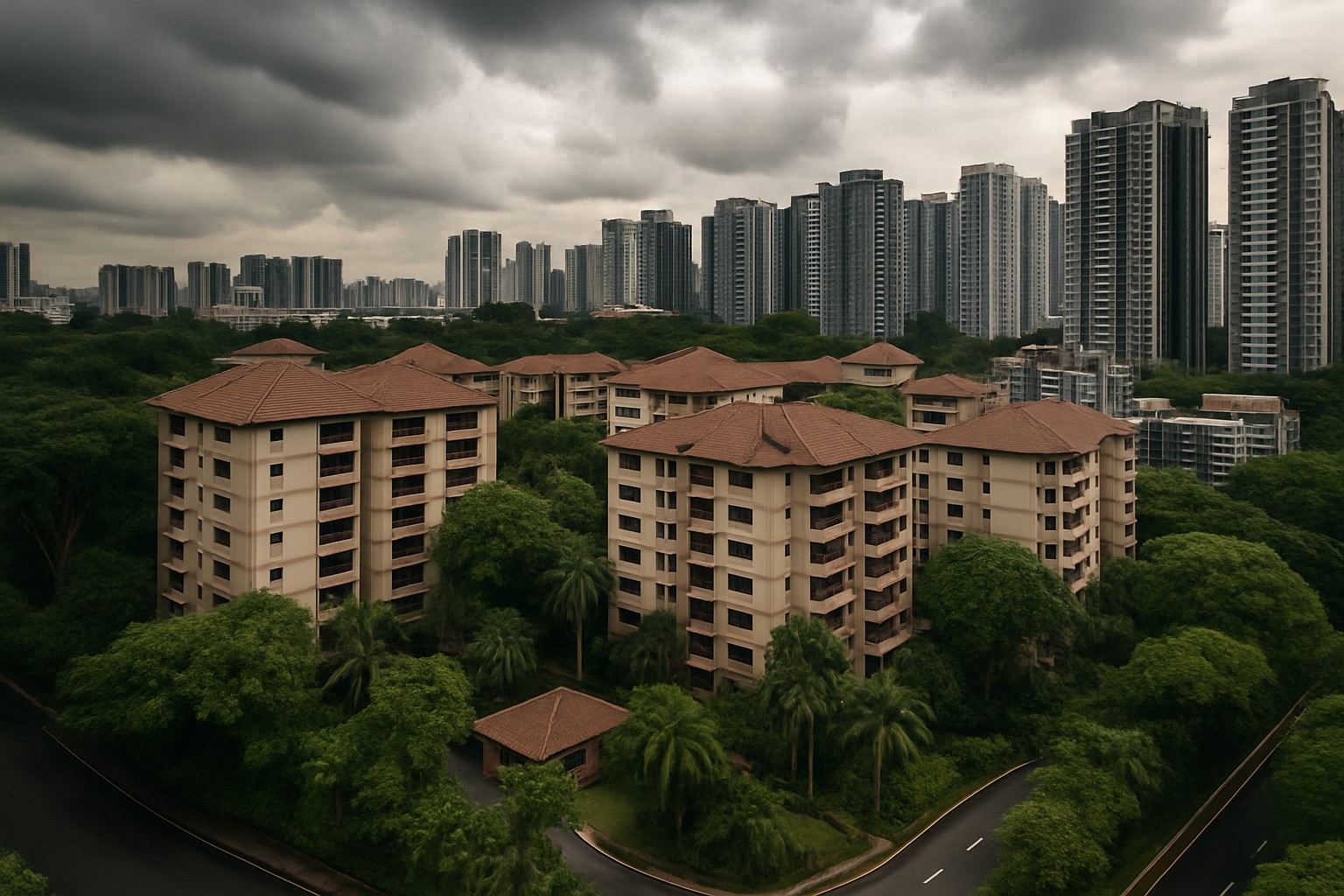
If you've ever looked at an older freehold condo in a prime district and wondered whether it might be sitting on hidden en bloc value, this story is worth your full attention. A 47 to 50-year-old freehold development in Novena has just launched its fourth collective sale attempt, this time at a reserve price of S$198 million. Three prior attempts since 2005 have all failed. That history alone should tell you something, and I want to walk you through exactly what it tells me after 25 years in this market.
According to reporting by Stacked Homes, this freehold development in District 11 is seeking S$198 million in its latest collective sale attempt, making it the fourth try since 2005. The development is approximately 47 to 50 years old, which puts it squarely in the category of aging freehold stock where escalating maintenance costs and aging facilities make a collective exit increasingly attractive to owners.
The implied developer economics, based on typical Novena freehold site parameters, are tight. Research data suggests a land cost of roughly S$1,800 to S$3,100 per square foot per plot ratio, with construction and financing costs on top. That pushes the estimated breakeven selling price to approximately S$3,200 to S$4,000 PSF, with a viable launch price needing to reach S$3,800 to S$4,500 PSF or above to deliver a workable margin. Current new launch benchmarks in the Novena vicinity, including projects like Klimt Cairnhill, are tracking around S$3,000 to S$3,500 PSF. That gap matters.
Under the Land Titles (Strata) Act, the sale requires 80% consent by both share value and strata area, given the development is over 10 years old. Developers purchasing the site also face a 35% Additional Buyer's Stamp Duty (ABSD), though this can be remitted to an effective 5% if all units are sold within five years of land purchase. That five-year clock creates real pressure and is a key reason developers are selective about which en bloc sites they bid on.
In my view, three prior failures on the same site are not just a historical footnote. They're a structural signal. What Stacked Homes framed as a paradox is something I've seen play out repeatedly in Singapore: the larger and more heterogeneous the ownership base, the harder it is to get 80% of owners genuinely aligned on both price and timing. Consent fatigue is real, and a persistent minority bloc can kill an attempt even when broader market conditions are favourable.
Here's the thing most people miss about this fourth attempt. The macro environment is arguably more supportive now than in any of the previous three rounds. The US Federal Reserve began cutting rates in September 2024, which improves developer financing economics. The H1 2025 Government Land Sales Confirmed List has leaned toward suburban sites, which makes freehold urban land in District 11 genuinely scarcer for developers looking to replenish their land banks. Those are real tailwinds. But tailwinds don't override a S$198 million reserve price that leaves razor-thin margins for the developer at current new launch benchmarks.
What I'm seeing on the ground is that developers are being highly selective right now. They'll bid on sites where the numbers work cleanly. Sites where development charges have risen sharply, where end-market absorption at target PSF is uncertain, or where minority consent issues remain unresolved, tend to attract either no bids or bids well below the reserve. The CSC needs to have genuinely resolved the internal consent dynamics before this launch, not just hope the market does the work for them. If that groundwork hasn't been done, a fourth failure remains the most likely outcome, regardless of the supportive macro backdrop.
If you're an investor eyeing older freehold condos as an "en bloc play": be very honest with yourself about what you're actually buying. Freehold Novena addresses do hold long-term value, and I think that's a legitimate foundation for ownership. But treating the en bloc premium as a near-term certainty is a different bet entirely, and this particular development's 20-year track record of failed attempts should calibrate your expectations. Research data puts gross rental yields in Novena at approximately 2.0 to 2.8%, which means the investment case leans heavily on capital appreciation or en bloc upside, not income. If the en bloc doesn't materialise, you're holding an aging asset with rising maintenance costs and a relatively modest yield. Price your entry accordingly.
If you're a private condo buyer or seller in the Novena and Newton corridor: a successful en bloc here would remove existing units from the resale pool in an already tight District 11 market, which marginally supports resale pricing in the short term. When the site is eventually redeveloped, probably four to five years post-purchase, the new launch will set a fresh PSF benchmark for the area. Buyers planning to enter this corridor should watch that eventual launch pricing carefully, as it will likely anchor market expectations upward for neighbouring resale stock.
If you're an HDB upgrader looking at the Novena, Toa Payoh, or Bishan corridor: a successful collective sale would displace 50 or more households who need to find alternative housing quickly, typically within the same general area. That absorption pressure does create short-term rental and resale demand in surrounding estates. It's not a reason to rush your own decision, but it's a reminder that supply in this part of Singapore is structurally constrained. Do keep in mind that if you're buying a second property while still holding your HDB flat, you're looking at 17% ABSD as a Singapore Citizen, so the timing and sequencing of your move matters enormously.
The S$198 million Novena en bloc is a story about genuine market interest colliding with equally genuine structural challenges. Developer land hunger, freehold scarcity, and improving financing conditions are all pointing in the right direction. But three failed attempts since 2005, tight implied developer margins, and the unresolved question of minority owner consent mean this is far from a done deal. Watch whether the CSC attracts any bids at the reserve price, and watch what those bids signal about where developers think Novena new launch pricing can realistically go. Whether you're an investor, an upgrader, or simply someone tracking the D11 market, those signals will tell you a lot about where this pocket of Singapore's property landscape is heading. If you want to think through what any of this means for your specific situation, I'm always happy to have that conversation.
Reach me on WhatsApp at +65 9750 1055 or visit keithtanboonkee.com to get started.
25 years experience · 1,000+ transactions · 4,379 TOP units managed
💬 WhatsApp Me